


A Theater Saved by Community
The Story of the Cameo
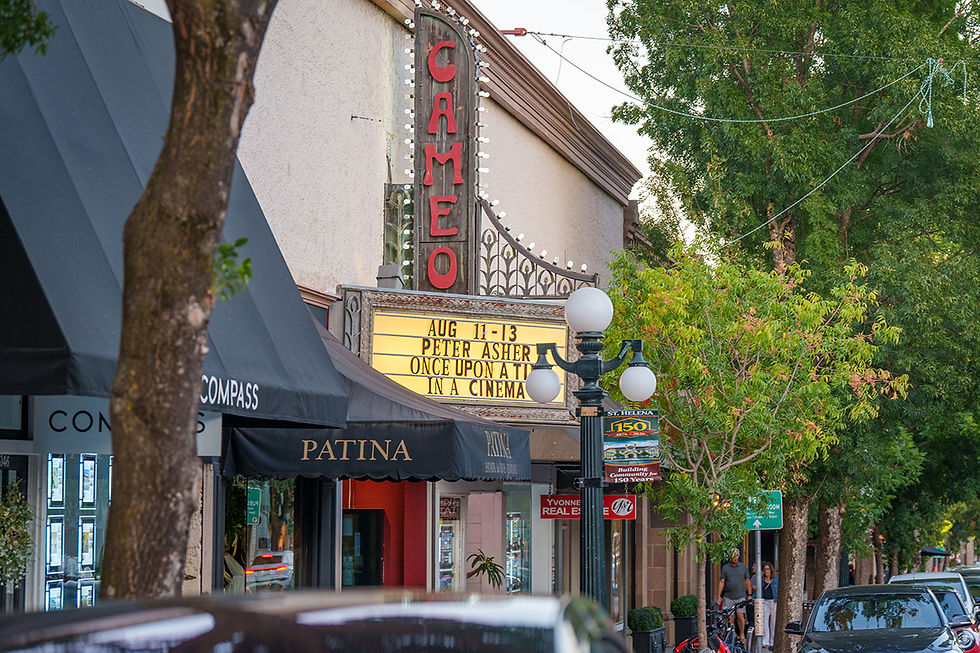
It may come as a surprise, but Cathy Buck, owner of the Cameo Cinema in St. Helena, did not grow up with a deep love of movies.
“I grew up in Michigan and I’m the oldest of nine,” says Cathy, who has owned the Cameo since 2007. “Going to the movies wasn’t much of an option for us. There was a small cinema in a town smaller than Saint Helena. It was a mom-and-pop show; the husband took the tickets; the wife met you at the door and took your ticket stubs and the daughter worked on the concessions. They were only open on the weekends and showed only G movies. I think it was 50 cents to get in. When they retired they closed the theater and it never reopened.”
Even when she first considered taking over the Cameo, Cathy still was not a movie fan.
“I had three kids and they were all in sports and I sold real estate. Movies weren’t on my radar a lot. When I moved here, I decided that I had sold real estate for 21 years and it was time to do something different. When the theater came up for sale, I thought that sounded like a fun job. It’s timeless; everybody comes to the movies so they’re in a good mood and it should be a lot of fun.”
She laughs now at her early optimism. “It’s the hardest job I’ve ever done. I had no idea that there were so many moving pieces and parts and just when you’d get it dialed in, it changes. There’s staffing, which has changed a lot. Even concessions have changed especially because we try to make sure that the purveyors are mostly local.”
When Cathy started, Cameo still ran movies on film. In 2009 she added a digital projector and worked half in film and half digital until the theater eventually became fully digital. What the public rarely sees is the financial pressure behind those changes.
When she entered the business, studios took between 30 and 35 percent of box office revenue. As studios pushed theaters toward digital formats, they also shifted their own pricing structures.
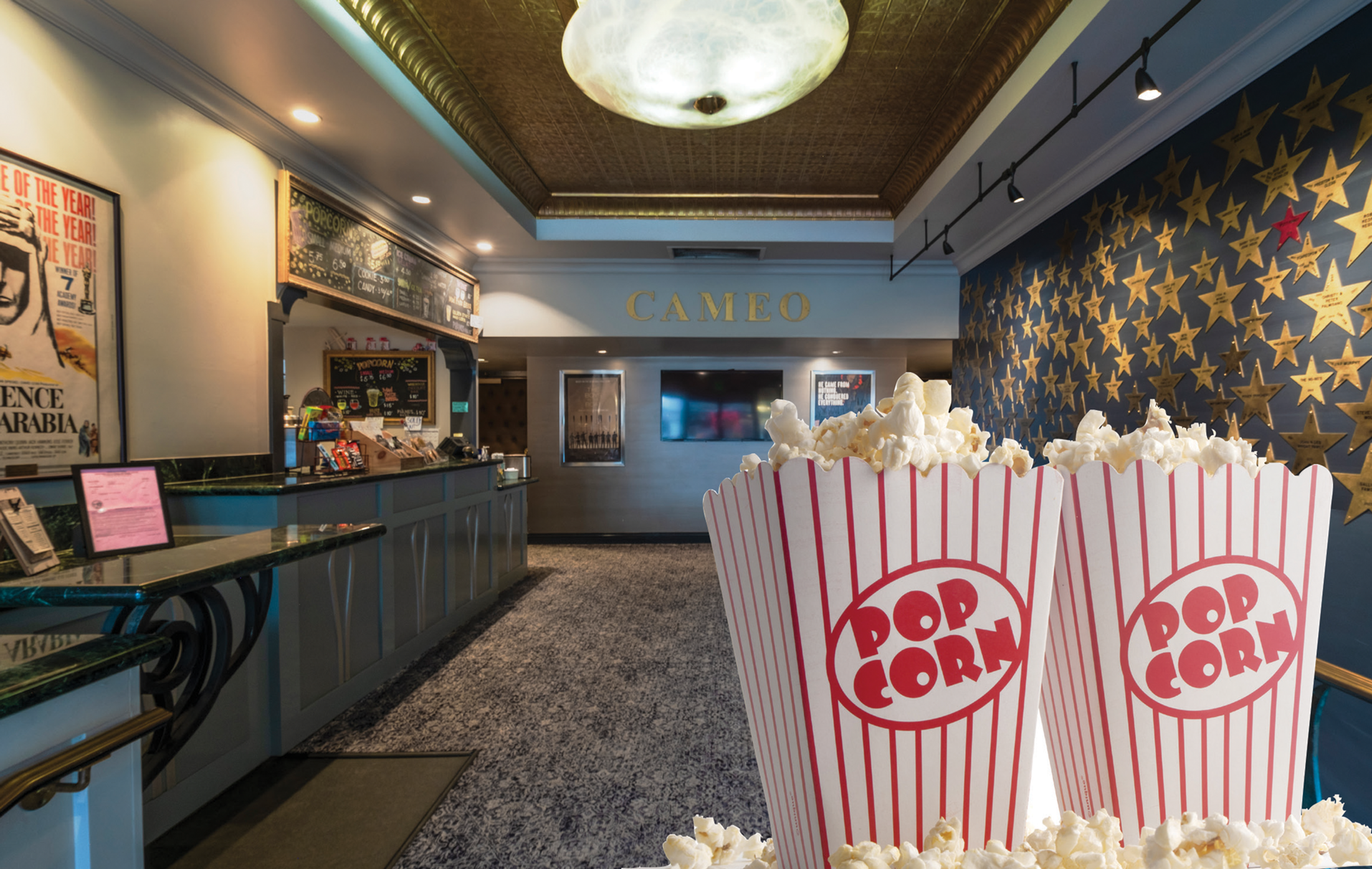
“I changed to digital early on, but the challenge is that they have tiers of who gets what, when. The main movie houses in big cities have first run. Then there’s a second tier like multiplexes. I’m the third tier and to me it doesn’t make sense because we all have the same equipment and we all play by the same rules. What difference does it make if I have it once when one of these other theaters have it? That’s been challenging. There’re also no rules for a smaller theater. I’m one of the last single screen theaters in the country. If I take a big movie like Odyssey, I have to play it for three weeks. Our local patrons want to see something else that third week.”
Cathy has continued to invest in Cameo’s experience, including installing Dolby Atmos surround sound with more than twice as many speakers. The immersive system allows sound to move overhead and behind the audience, something rarely found in a single screen theater.
“Now the studios take between 65 and 72% of the box office, so your net ticket price is less and less. That’s one of the reasons I keep my ticket price at $10 and ask for donations. That way, 100% donations go to the cinema. It will only generate 30% more if I increase the ticket price. It’s a challenge every day and just when you think you got it figured out, the rules change on you.”
Despite the challenges, Cathy remains optimistic. “We have survived fires, we’ve survived an earthquake, COVID, motion picture strikes and streaming and we’re still alive. That’s due to the support of the community. They help with donations to keep our theater going, so it’s pretty special.”
She has also nominated the Cameo Cinema for the Motion Picture Academy’s new Marquee Award. Only 25 theaters in the United States and 25 internationally will receive the honor, and thousands have applied. The award recognizes community engagement, historic significance, preservation, programming, design, lighting and overall theater conditions.

“The Cameo checks all the boxes, and we are one of the only single screen theaters, so I think we have a very good chance to be awarded,” Cathy says. “That would put us on a national and international radar as one of the best cinemas to see a movie in in the country. We hope the distributors may move us up to the second tier and influence the different studios.”
The industry continues to shift, and consolidation among studios adds new uncertainty.
“If we get down to three major studios, they’ll control 30% of the product,” says Cathy. “I don’t know what’s going to happen because they’ll also control the streaming. In the Paramount and Warner Bros. merger, they guaranteed that they’ll release 30 movies a year. Thirty movies a year is not a lot of movies. However, I’ve seen recently a couple of new studios pop up and one studio in particular (Black Bear Pictures) has had some good movies. They just had The Rivals of Amziah King, starring Matthew McConaughey, which was fantastic.”
To help stabilize the theater’s future, Cathy created the Cameo Cinema Foundation, a nonprofit 501(c)(3).
“In the beginning we had an organization, the Cantu Foundation, who were proponents of art house indie films,” says Cathy. “When I bought the theater, the previous owner, Charlotte Wagner, showed independent art house films a couple nights a week. I suggested every Wednesday night to do this, and Cantu said we want to support that. When we went after purchasing the digital projector we wrote a grant and Cantu foundation funded our first digital projector.”
By 2012, Cathy realized the theater needed its own nonprofit arm. She reached out to frequent patrons and formed the Cameo Cinema Foundation to support community programming and fundraising. Donations range from $20 a month to larger gifts recognized with stars on the wall or seat plaques.
“I have a great 10-member board, whose goal is to reach out in the community.”
Ann Doyle joined the board in 2023 and became Board President in 2024.
“I have always loved going to the movies and have wonderful memories of seeing films for the first time in a theater,” says Ann. “Seeing a film on the giant screen with powerful life-like sound, delicious popcorn, a glass of wine, and no phone, and sharing that experience with an audience, is so much more memorable than watching at home.”
Ann believes Cameo’s intimacy sets it apart. “I especially love a single screen theater because it’s more intimate than a multiplex. The Cameo has so much to offer; state-of-the-art projection and sound equipment, ticket and concession prices below what you pay at a multiplex, and love seats in the back rows. In addition to showing films, the Cameo hosts live music events, educational events, and exciting speakers. The Cameo is a community treasure. It’s been a privilege to serve on the board and work to keep the theater thriving.”
Cathy knows the future depends on continued community support. “Hopefully not in my day or never, if the community doesn’t support the theater, that means it’s no longer important as part of the cultural hub. That’d be hard.”


Comments